


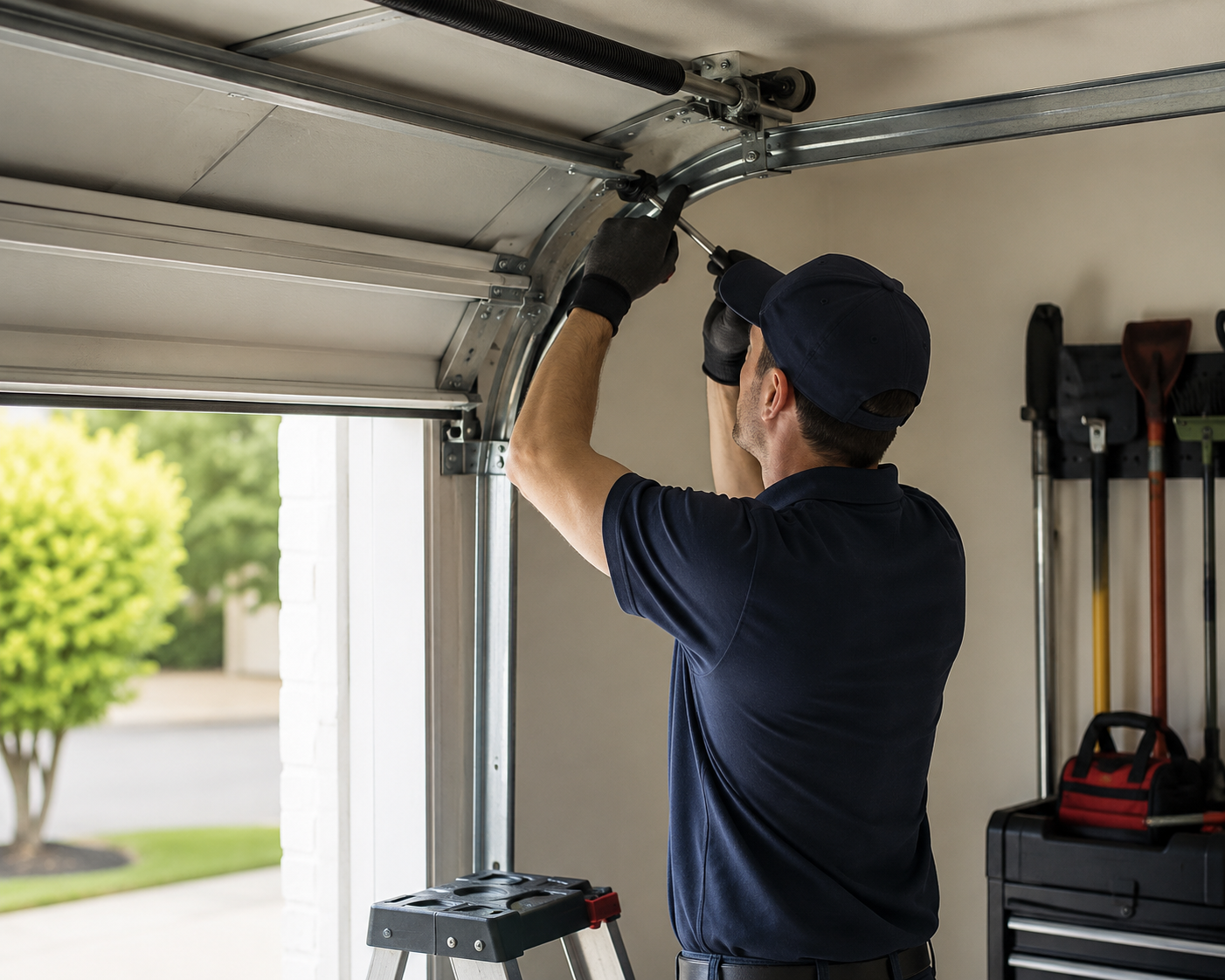
Every spring it plays out the exact same way: you glance down at the base of the garage door and the rubber seal has split into a brittle, cracked mess all over again. The reason it keeps happening, and the reason it honestly doesn’t have to, comes down to heat resistant garage door seals, or more to the point, the cheap ones most doors ship with that were never built for a climate like this. Desert heat is merciless on weather stripping, full stop. A standard vinyl or low-grade rubber seal bakes hard in the afternoon sun, swells through the worst of the daytime heat, then shrinks back again overnight, over and over, until the tired material finally just gives up and fractures. Pile on the bone-dry air and the constant ultraviolet glare, and a seal that might comfortably last a decade somewhere humid barely scrapes through a single year out here. That crack you keep staring at every year isn’t rotten luck, it’s the wrong product slowly losing a fight it was never built to win.
1. What’s Really Tearing Your Seal Apart Every Year
Three separate forces gang up on the garage door weatherstripping out here, and together they are genuinely brutal. First comes the raw heat, which softens cheap material all day long and then lets it harden and shrink right back overnight, a relentless stretch-and-snap cycle that fatigues the rubber alarmingly fast. Second is ultraviolet light, which chemically chews away at the seal from the outside, leaving it chalky, faded, and stiff to the touch. Third is the region’s famously bone-dry air, which quietly draws every last bit of moisture and natural flexibility out of the material until it snaps apart like a forgotten eraser. It’s really no wonder a bargain-bin seal barely manages to limp across the twelve month mark before failing.
2. Choosing a Material That Simply Won’t Quit on You
Here’s the part that actually solves this whole headache for good, and it all hinges on the material itself. The best weather stripping for desert homes is almost always EPDM rubber, a synthetic specifically engineered to flex through wild temperature swings without ever turning brittle. Unlike standard vinyl or PVC, which hardens and splits under relentless sun, EPDM and better silicone seals remain genuinely pliable for years on end in exactly these punishing conditions. They do cost a bit more sitting there on the shelf, sure, but you stop buying a fresh one every single spring, which quietly makes them far cheaper over the long haul. Ask the supplier specifically for a UV-stabilized version, and you’ve already won most of this battle before it even begins.
3. Keeping the Rubber Supple Season After Season
Even a genuinely good seal still needs a helping hand to survive an environment this harsh. Preventing garage door seal dry rot mostly comes down to a fast wipe and a coat of protectant just a few times across the year. A clean, damp cloth clears off the abrasive dust that constantly grinds at the surface, and a silicone-based rubber conditioner restores the very flexibility that the dry desert air keeps stealing right back. Steer well clear of any petroleum-based products here, since they can break down the rubber faster rather than protecting it the way you’d hope. Ten quiet minutes a season keeps the material soft and supple and buys it years of life it would never reach all on its own.
4. Swapping Out the Old Seal When It’s Finally Time
When the old seal is truly too far gone to save, the replacement itself is a fairly straightforward job that most handy homeowners can knock out alone. The single most common version of this task is replacing bottom seals in Palm Springs, CA, homes, where a long astragal strip slides neatly into a retainer track running along the very base of the door. Slide the cracked old one out, clean every bit of caked-on grit from the channel, then feed the fresh seal in, using a little soapy water to ease it along smoothly. Make absolutely sure you measure your retainer type first, since the T-style and the bead-style channels are not even slightly interchangeable. Match the correct profile and that new seal locks in clean and tight, shutting out the dust and heat in one satisfying pass.
5. The Bigger Picture Around the Whole Door Frame
The bottom seal tends to hog all the attention, but it’s honestly far from the only weak point on the door. The vinyl stripping running up both sides and across the top dries out and cracks in the very same way, quietly letting heat and fine grit sneak in around the edges. Take a slow, deliberate walk around the full frame once each season and press firmly on the seals, hunting for stiffness, gaps, or thin slivers of daylight peeking through. If the door itself has drifted out of square or the gaps suddenly look uneven side to side, that usually points to a hardware problem a fresh seal alone simply won’t fix, and it’s well worth a professional eye. A door that closes perfectly true is one that makes every last seal on it last considerably longer.
Conclusion
If your weather stripping cracks like clockwork every single year, the seal itself was never really the problem, the choice of seal was. Swap that cheap vinyl out for UV-stabilized EPDM or a quality silicone built for serious heat, and the whole exhausting yearly ritual quietly comes to an end. Back that up with a seasonal wipe-down and a quick dab of silicone conditioner, and the rubber stays soft well past the point where the old stuff would have already shattered. When replacement day finally does roll around, matching the right profile to your retainer turns it into a quick, clean afternoon job. Beat the desert at its own stubborn game just once, and you stop fighting the very same crack every spring for good.
FAQs
Q1: Why does my garage door weather stripping keep cracking in Palm Springs, CA?
In Palm Springs, CA, the intense heat, UV, and bone-dry air break down cheap vinyl seals within a year. Daily expansion and contraction fatigue the material until it splits, which is why a UV-stabilized EPDM or silicone seal holds up far better.
Q2: What is the best weather stripping for a desert garage door?
For homes in Palm Springs, CA, EPDM rubber and high-quality silicone seals are the top choices because they remain flexible through extreme temperature fluctuations. Ask for a UV-stabilized version, and avoid standard PVC, which hardens and cracks fast in the sun.
Q3: How often should I replace my garage door bottom seal in the desert?
A cheap seal in Palm Springs, CA, may need replacing yearly, but a heat-rated EPDM seal can last several years. Cleaning it and applying a silicone conditioner each season stretches its life and keeps dust and heat out longer.