


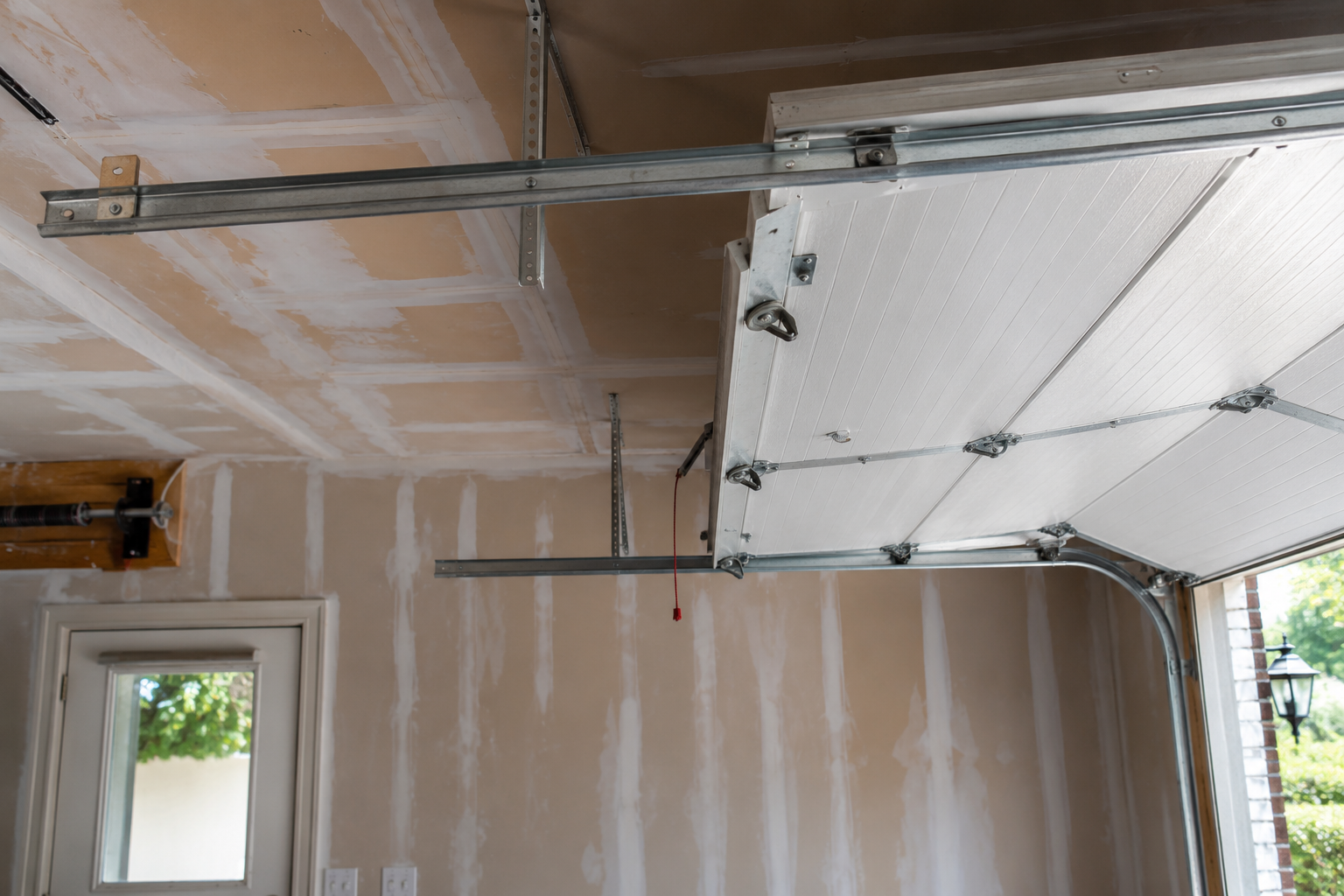
A garage door installed a mile from the ocean ages nothing like the same model sitting forty miles inland, even with identical maintenance schedules. Understanding Coastal garage door impact starts with one basic fact: salt suspended in humid ocean air behaves nothing like plain inland moisture. It attacks metal through a chemical process that regular humidity never triggers. That salt laden air settles on every exposed surface, working into seams, hinges, and fastener threads long before rust becomes visible to the eye. Material choice, hardware quality, and finish all matter more near the coast than they would somewhere with cleaner, drier air. Skip that consideration at purchase time, and the door ends up looking tired years before its rated lifespan should have allowed. Buy on price alone, and a homeowner often pays twice, once up front and again at an early, unplanned replacement.
1. Why Salt in the Air Behaves Differently Than Regular Humidity
Ordinary humidity causes gradual oxidation on unprotected metal. Slow. It takes years to show up on a coated surface. Salt particles suspended in coastal air act as an electrolyte instead, speeding up the same rust reaction far beyond what plain moisture alone would ever cause. Wind carries that salt inland as a fine mist, landing on surfaces blocks away from the water itself, which is exactly why coastal effects reach well past the properties with an actual ocean view. Once salt residue builds up on metal, it holds moisture longer than a clean surface would, and that damp layer keeps the corrosion process running nonstop. This is the whole reason materials rated fine for typical outdoor exposure sometimes fail years ahead of schedule the moment salt enters the picture.
2. Steel Doors and the Corrosion Clock That Starts Immediately
Standard steel garage doors lean entirely on their protective coating, usually a layer of galvanization under paint or a powder coat finish, to keep salt and moisture off the raw metal underneath. Scratch or chip that coating, even a spot no bigger than a coin, and salt air finds its way straight to bare steel. Corrosion spreads outward from that single point fast. Salt air damage prevention for steel doors mostly rests on two things: picking a heavier-gauge galvanized coating from the start, and fixing any chip or scratch right away instead of letting it sit through a season. Rinsing regularly with fresh water, clearing off salt residue before it settles in, stretches a steel door’s service life quite a bit in coastal conditions. Skip that upkeep, and a steel door in a truly salty spot can show serious rust in just a few years.
3. Aluminum’s Advantage and Its Own Set of Tradeoffs
Aluminum forms its own natural oxide layer, one that actually protects the metal underneath instead of weakening it, which makes it a lot more corrosion resistant than untreated steel in salty air. That natural resistance explains why aluminum garage doors show up so often near the coast, cost premium and all. Aluminum isn’t invincible, though. Pitting corrosion can still develop over years of constant salt exposure, particularly around fasteners and anywhere dissimilar metals touch. Dents show up more easily too, since the metal itself is softer, so the corrosion resistance trades off against a different kind of durability worry entirely. Pick aluminum for a coastal property, and you’re usually accepting rust resistance in exchange for dent resistance, not getting both in the same package. A household with kids or a busy driveway sometimes weighs the dent risk heavier than the corrosion upside.
4. Wood, Vinyl, and Composite Options Worth Comparing
Wood garage doors demand the most active upkeep in a coastal environment, since salt air speeds up both the swelling and drying cycles that eventually crack and warp anything left unsealed or poorly treated. A quality sealant, reapplied on a strict schedule, can keep a wood door performing fine near the coast, though the maintenance commitment runs well above what metal alternatives ask for. Vinyl sidesteps corrosion completely, no metal, no rust, though it can turn brittle after years of combined UV and salt exposure, especially somewhere sunny. Composite doors, wood fiber blended with resin, land somewhere in between, offering better rot resistance than solid wood without steel’s corrosion problem. None of these three options wins outright. Each just fails in a different way, on a different timeline, depending on how much upkeep a homeowner is actually willing to put in.
5. Hardware Matters as Much as the Door Panel Itself
Hinges, rollers, tracks, springs, all the small stuff gets overlooked in most coastal material conversations, even though it fails from salt exposure just as fast as the door panel, sometimes faster given how thin standard plating tends to run. Basic zinc plated hardware corrodes quicker near the coast than stainless steel or marine grade hardware built specifically for salt exposure. A door panel holding up perfectly can still run badly, or fail outright, if the hardware underneath has quietly rusted through. Upgrading to corrosion resistant hardware at installation costs more upfront, sure, but it avoids the situation where a solid door gets dragged down by everything holding it together.
Conclusion
Coastal climates rewrite the entire calculation around garage door materials, pushing toward corrosion resistant options and a bigger upfront spend on coatings and hardware quality. Steel, aluminum, wood, vinyl, and composite doors each respond differently to salt exposure, and knowing those differences before buying heads off an expensive surprise a few years down the road. Door Pros walks homeowners through which materials and hardware combinations actually hold up in specific coastal conditions, rather than recommending whatever installs the fastest. Getting this right upfront costs less than replacing a door that failed years ahead of schedule. A garage door picked with the actual coastal environment in mind tends to look and work well for a lot longer than one chosen without that thought, and the gap usually shows within just a few short years.
“Worried about salt air damaging your garage door? Door Pros can help. Call 877-787-3667.
FAQs
Q1. Do garage doors need special protection in coastal areas?
Yes, coastal properties benefit from corrosion resistant materials like aluminum or heavily galvanized steel, since salt in the air accelerates rust far more than typical inland humidity.
Q2. How often should a garage door be rinsed in a salty coastal climate?
Rinsing with fresh water every few weeks helps remove accumulated salt residue before it has a chance to settle into seams, hinges, and fastener threads.
Q3. Is aluminum or steel better for a garage door near the ocean?
Aluminum generally resists corrosion better than steel near the coast, though it dents more easily, so the right choice often depends on which tradeoff matters more for the specific property.