


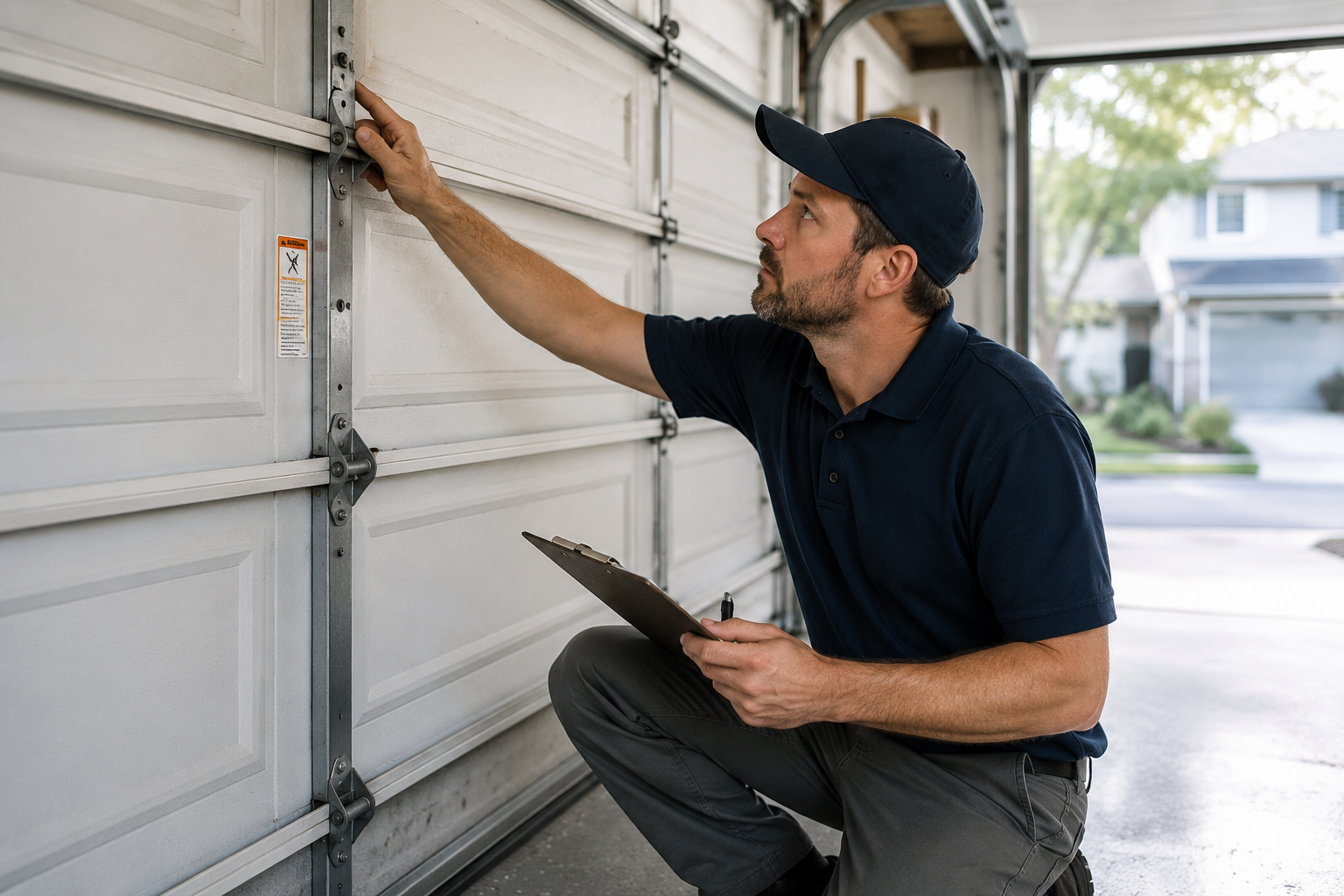
Sellers spend weeks staging living rooms and repainting trim, then completely forget about the garage door until a buyer’s inspector flags it during due diligence. A Garage door inspection before selling catches exactly the kind of issue that derails a closing timeline or triggers a last minute price renegotiation nobody wanted to have. Buyers notice a garage door immediately, since it’s often the largest single visual element on a home’s front exterior and one of the first things anyone sees pulling into the driveway. Beyond appearance, a home inspector checks mechanical function, safety features, and structural condition, areas a casual walkthrough would never catch. Skipping this inspection doesn’t make the underlying issues disappear. It just means a buyer’s inspector finds them first, on their terms and timeline instead of the seller’s. That timing difference matters more than people expect. One version of this story costs three hundred dollars. The other costs a delayed closing and a credit at the table.
1. Why Buyers and Inspectors Both Scrutinize This One Component
A garage door represents a meaningful chunk of a home’s exterior square footage, which means buyers form an impression of the whole house partly based on how that door looks and sounds operating. Home inspectors specifically test auto reverse function, check spring tension, and look for structural damage as a standard part of most inspection checklists. A door that grinds, sticks, or hesitates during operation raises questions in a buyer’s mind well beyond the door itself, sometimes making them wonder what else in the house has been neglected. First impressions compound. A rough sounding garage door right after a buyer pulls up sets a skeptical tone for the rest of the walkthrough. That skepticism doesn’t stay contained to the garage, either. It quietly follows the buyer through every other room after that.
2. What a Pre-Listing Inspection Actually Checks
A pre-listing garage door inspection covers spring tension and wear, cable condition, track alignment, and whether the auto reverse safety feature actually functions correctly. Weatherstripping and seals get checked too, since gaps there sometimes read as neglect even when the mechanical components are perfectly sound. Panel condition matters visually and structurally both, covering dents, rust, and any warping that might affect how smoothly the door operates. Opener function gets tested last, confirming remote range, keypad function, and whether the unit responds consistently across multiple open and close cycles. A thorough inspection takes maybe thirty minutes and produces a clear list of anything actually worth addressing before listing. Half an hour against a transaction worth six figures. That math works out fine for pretty much anyone selling a house.
3. Small Repairs That Prevent Bigger Negotiation Problems
Home sale preparation involving garage doors usually costs far less than homeowners assume, since most issues turn out to be a worn roller, a weak capacitor, or a misaligned sensor rather than anything requiring full replacement. A capacitor swap runs cheap and takes minutes. A buyer’s inspector flagging a nonfunctional door, though, can trigger a credit request or a repair demand worth considerably more than the actual fix once real estate negotiations get involved. Addressing small issues before listing keeps them off the inspection report entirely, avoiding the negotiation leverage a buyer gains from any documented defect. Sellers who handle this proactively typically spend a fraction of what a post-inspection repair demand would have cost them at the closing table. Forty dollars in parts now. Or a negotiated credit worth ten times that later. The choice isn’t really close.
4. Safety Compliance Issues That Can Delay Closing
Missing or malfunctioning auto reverse safety features sometimes trigger a required repair before some lenders will finalize financing, adding real delay to an already tight closing timeline. Older doors without photo eye sensors, a feature mandated since 1993, occasionally raise flags during inspection even though replacement isn’t always legally required for an existing structure. Frayed cables or visibly worn springs represent both a safety concern and a talking point a buyer’s agent will use during negotiation, regardless of whether it’s a mandatory fix. Addressing these specific issues before listing removes a category of problem that otherwise sits waiting to surface at the worst possible moment in a transaction. A closing delayed by a week over a two hundred dollar repair frustrates everyone involved for a completely avoidable reason. Movers get rescheduled. Rate locks get squeezed. All over something that could’ve been fixed in an afternoon months earlier.
5. Curb Appeal Versus Functional Repair: Doing Both
A garage door that operates flawlessly but looks dated and dinged up still hurts a listing’s first impression, even if it never shows up on an inspection report at all. Conversely, a freshly painted door with underlying mechanical issues eventually gets caught anyway, once an inspector or a buyer actually tests the operation. Addressing both dimensions together, function and appearance, maximizes the return on whatever gets spent preparing a home for listing photos and showings. A relatively modest investment in both repair and light cosmetic work often returns more at sale than either fix handled in isolation. Sellers focused purely on staging interior rooms sometimes miss this specific opportunity entirely, pouring hours into throw pillows while the garage door outside quietly undoes some of that work.
Conclusion
A garage door inspection before listing catches the kind of issue that otherwise surfaces at the worst possible moment, during a buyer’s own inspection with negotiation leverage already in their hands. Mechanical function, safety compliance, and visual condition all factor into how a garage door affects a sale, not just one of those three in isolation. Door Pros performs pre-listing inspections for Coachella Valley sellers specifically designed around what actually shows up on a buyer’s inspection report. Spending a small amount upfront on repairs almost always beats negotiating from a weaker position once a buyer’s inspector has already found the same issues. A little preparation here protects both the sale price and the timeline everyone’s counting on, from the seller packing boxes to the buyer already planning where the furniture goes.
“Selling soon? Get your garage door inspected first. Door Pros can help. Call 877-787-3667.”
FAQs
Q1. Should I get my garage door inspected before listing my home in Palm Desert, CA?
Yes, since buyers and their inspectors both scrutinize garage door condition closely, and catching issues beforehand avoids negotiation leverage a buyer gains from a documented defect.
Q2. What does a garage door inspection check before a home sale in Indio, California?
A thorough inspection covers spring tension, cable condition, track alignment, auto reverse function, weatherstripping, and panel condition, among other mechanical and cosmetic factors.
Q3. Can a bad garage door delay closing on a home sale in Coachella Valley, CA?
It can, especially if safety features like auto reverse aren’t functioning correctly, since some lenders require that repair before finalizing financing.