


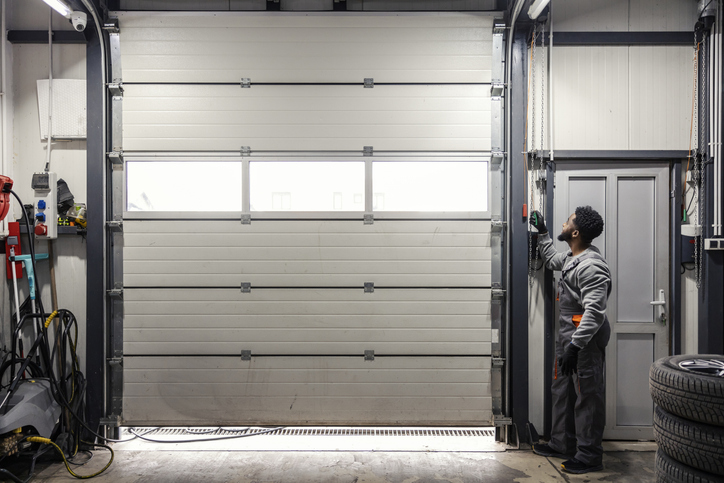
Smart automation is redefining the way advanced door systems function in both commercial and industrial settings. Today’s facilities expect faster operations, stronger security, and components that interact with building technologies. These are the expectations guiding major advancements in specialty door services in Palm Desert, CA.
Contemporary buildings rely on more than simple mechanics. They rely on networked systems that speak with sensors, software, and automated workflows. Experts at Door Pros note that specialty doors are increasingly part of larger digital networks utilized across warehouses, healthcare facilities, corporate buildings, and active public zones. And this shift continues to shape the next generation of innovation.
1. Smart Sensors Advancing Door Intelligence
Smart sensors are increasing the responsiveness of specialty doors. Devices such as motion detectors, infrared modules, and pressure sensors enable doors to operate with greater precision than ever before. These tools enhance access flow in high-traffic areas by reducing unnecessary motor strain since they only turn on when needed.
Future sensor upgrades will be focused on predictive behavior: the doors will track patterns and find issues, such as friction changes, declining motor strength, or minor misalignment. In such a way, facility teams can take action before problems worsen. Over time, predictive capabilities will lead to steady performance in each of the automated entry points.
2. AI-Driven Access Control Systems
Access control using AI will feature much more in the advanced technologies of upgraded doors. Advanced controllers analyze traffic flow, detect unusual activity, and adjust permissions based on real-time conditions. This kind of approach works well for those buildings that require shifting security levels.
With evolving AI, systems will integrate data from cameras, sensors, and authentication devices into unified decision-making modules. These platforms keep the traffic moving in an orderly fashion during peak periods and tighten up the bottlenecks when required. Future AI tools may study user behavior in order to speed up the recognition and cut delays in busy corridors.
3. Energy-Smart Automation For Modern Buildings
Energy-efficient automation is fast gaining strong traction. Automated closures that reduce air loss and insulated panels that adjust to the interior conditions are highly instrumental in assisting HVAC performance, therefore reducing operational costs of commercial buildings.
Newer systems also include low-power motors, renewable-friendly components, and friction-minimizing hardware. In tandem with monitoring software, building teams can observe how the use of doors contributes to energy consumption over time. That helps an organization reduce waste and achieve long-term goals regarding efficiency.
4. Advanced Materials and Durability Engineering
The next generation of specialty doors is greatly improved, thanks to upgraded materials. Reinforced composites and corrosion-resistant metals provide greater durability with no unnecessary weight gain. These work splendidly in harsh environments such as loading docks, refrigerated facilities, and manufacturing zones while supporting better insulation in Palm Desert, CA, for climate-controlled areas.
The manufacturers are also designing noise-reducing and vibration-control components to facilitate quiet and stable operation. This enhancement offers protection to internal parts from early wear. As material science continues to evolve, doors will have coatings and structural layers that can endure high cycles and harsh weather without a loss in performance quality.
5. Integration With Full Building Automation Systems
Integration with building automation platforms is becoming the standard. Specialty doors now integrate with systems that govern lighting, HVAC, entry management, and security. Operators can view door status, adjust schedules, or modify settings through a single interface.
Future platforms will expand remote management capabilities.
Technicians will get real-time alerts of performance changes and have data access from cloud-based dashboards. This level of connectivity reduces on-site visits, thus enabling faster adjustments across multiple access points. It allows for a more organized flow inside a large facility.
Conclusion
Specialty door systems are stepping into a new generation driven by automation, connected technology, and advanced engineering. Smart sensors, AI access control, components focused on energy efficiency, and innovative materials are driving changes in door functionality within modern spaces.
Buildings will gain solutions that quickly react to changes and support performance over the long term. Specialty doors will continue to demonstrate their strong presence in enhancing operational efficiency and safety as technology advances.
Upgrade your facility with smart door solutions and expert weather stripping in Palm Desert, CA, from Door Pros. Connect with us at 760-325-3667 for bonded and certified service by certified specialists who prioritize performance.