

A garage door used to be one of the least interesting parts of a house, a heavy panel that went up and down and nothing else. Smart garage door adoption changed that fairly quickly. What used to be a purely mechanical fixture is now something homeowners check from their phone on the way to work, half out of habit. The shift tracks broader smart home growth generally, but garage doors caught on faster than most other connected gadgets. Part of that is just how common the “did I close the garage” worry actually is. Manufacturers noticed the gap and started building Wi-Fi connectivity straight into openers instead of leaving it to an aftermarket add-on. A niche feature for early adopters a few years back now reads as close to standard, especially for buyers shopping in denser, more connected neighborhoods. A listing mentioning smart home compatibility lands as a selling point now, not a curiosity.
1. Why Smart Garage Doors Took Off When They Did
Smartphone use crossed a critical threshold sometime in the last decade. That gave manufacturers a stable platform to build connected features on, without asking anyone to learn something unfamiliar. Home security worries climbed alongside that shift, and a garage door left open by accident is a surprisingly common annoyance that a push notification fixes in seconds flat. Retrofit kits helped too, letting homeowners bolt smart capability onto an opener they already had instead of replacing the whole unit. Prices dropped a fair amount as the tech matured, and smart openers went from a luxury add-on to something close to standard at checkout. Put all of that together and adoption moved well past what anyone predicted five or six years back. Even people with zero interest in smart home gadgets generally made an exception for the one device that solves an actual, recurring worry.
2. What’s Actually Inside a Smart Opener
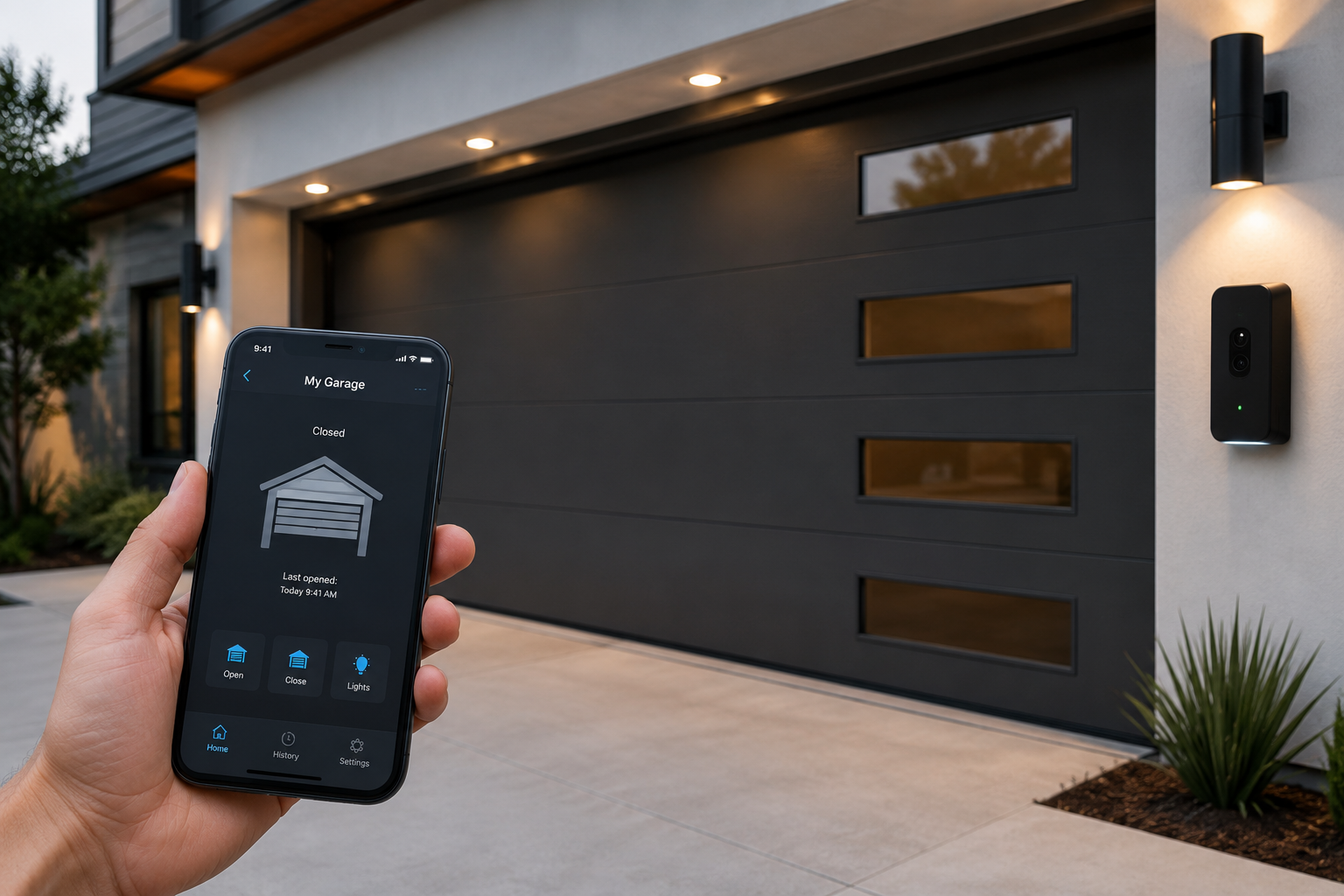
A smart garage door opener usually pairs a Wi-Fi enabled control board with a phone app, letting someone open, close, or check status from wherever there’s a signal. Rolling code encryption changes the access code every single time the door runs, which shuts down the vulnerability that plagued older fixed code remotes for years. Some units throw in a built in camera too, giving a live view of the garage instead of just a status light, useful for anyone waiting on a delivery or checking whether the teenager’s actually home. Following broader Urban home tech trends, plenty of newer openers now tie directly into voice assistants and existing smart home hubs. One app ends up controlling locks, lights, and the garage door together, instead of three separate apps fighting for attention on the same phone.
3. Security Concerns That Come With Convenience
Connecting a garage door to the internet brings a category of risk a purely mechanical door never had. Any networked device is, in theory, a target for someone with the right skills and a reason to bother. Rolling code encryption handles the most common historical attack, but firmware updates still matter because manufacturers occasionally patch holes discovered after a product’s already shipped. Shared access is handy for a family, risky if managed carelessly. A guest code or app login nobody remembers to revoke stays active indefinitely. Picking a manufacturer with an actual track record of firmware updates and quick security patches beats picking on price or app design alone. A cheaper opener from a company that abandoned its app years back is a worse bet long term than a pricier one still getting updates. Nobody thinks to check that history before buying, and it’s usually the thing that ends up mattering most five years down the road.
4. How Smart Doors Fit Into a Broader Connected Home
A smart garage door rarely stands alone anymore. It usually syncs into a bigger ecosystem with smart locks, doorbell cameras, and a central hub running the whole thing. Geofencing can close a door automatically once a phone drifts far enough from the house, catching the classic forgot to close it moment without anyone lifting a finger. Voice assistant integration means checking or controlling the door hands free, handy when arms are full of groceries and the phone’s buried somewhere in a bag. That interoperability is exactly what pushed smart garage doors past standalone gadget status into an actual working piece of a connected household, rather than a lonely purchase sitting off on its own.
5. What to Look for Before Upgrading
Compatibility with the existing opener comes first. Some smart features need a whole new unit, others bolt on as a kit that works with what’s already installed. Battery backup is worth checking too, because a smart opener that loses all function during a power outage undercuts half the reason to buy one. App reliability swings more than people expect between brands, and reading recent reviews instead of trusting the marketing copy usually shows which apps actually hold up day to day. Professional installation keeps the door’s safety sensors and alignment correct even after new hardware goes in, something a rushed DIY job gets wrong more often than it should. A sensor knocked a few degrees out of alignment can sit unnoticed for months before anyone realizes the safety feature stopped working.
Conclusion
Smart garage doors moved from novelty feature to near standard expectation faster than most home tech categories manage. Convenience, security alerts, and tying into the rest of a connected home all played a part in that shift. Door Pros helps homeowners around Coachella Valley figure out which smart options actually fit their existing setup, rather than pushing whatever’s easiest to sell that week. Getting compatibility, security, and installation right matters more than chasing whatever’s newest on the shelf, especially once the novelty wears off and the door just has to work every single day without drama. A garage door that actually fits into daily life beats one loaded with features nobody ever touches, no matter how impressive the spec sheet looked in the store.
“Thinking about a smart garage door upgrade? Door Pros can help. Call 877-787-3667.”
FAQs
Q1. Are smart garage doors worth it in Palm Desert, CA?
For many homeowners, yes, since remote monitoring and security notifications address a common worry cheaply compared to the cost of a break-in or a door left open unnoticed.
Q2. Can I add smart features to my existing garage door in Indio, California?
In many cases yes, since retrofit kits let homeowners add smart control to an existing opener without replacing the whole unit.
Q3. Is a smart garage door opener secure in Coachella Valley, CA?
Modern units using rolling code encryption and regular firmware updates are considerably more secure than older fixed code remotes, though choosing a manufacturer with a strong update history still matters.