


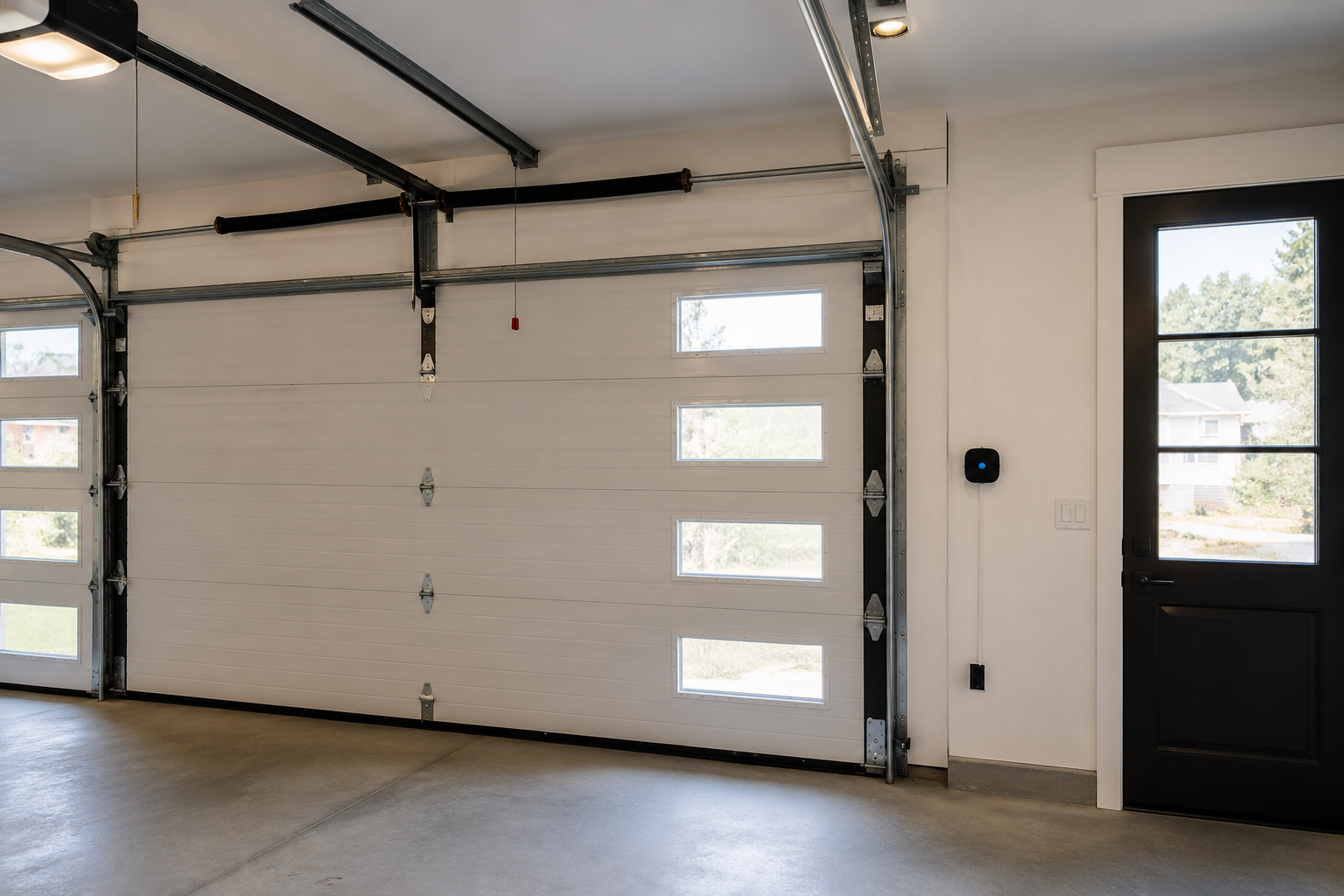
A garage door rattling awake half the house at six in the morning used to be just accepted, background noise nobody thought to question. Noise-reduction garage doors changed that assumption entirely, using specific engineering choices that cut the racket down to something closer to a whisper. Steel rollers grinding against a metal track. A chain drive opener clanking with every pull. An unbalanced door slamming the last two feet of travel. Each of these was a design choice, not a law of physics, and each one has a quieter alternative now sitting on a showroom floor somewhere. The difference between an old door and a new one isn’t subtle. It’s the gap between waking a baby and not. Decibel readings back this up, too. Twenty to thirty decibels of difference between an old chain drive setup and a properly upgraded modern system.
1. Why Older Doors Sound Like a Freight Train
Steel wheels on steel track. That combination alone accounts for most of the grinding, screeching sound people associate with garage doors from decades ago, the kind of noise that carries clearly through a closed window two houses down. Add a chain drive opener, metal links pulling against metal sprockets, and the noise compounds fast. That clanking rhythm, link after link catching against the sprocket teeth, is instantly recognizable to anyone who grew up with one. Loose hardware makes it worse still. A bolt that’s backed off a quarter turn over years of vibration rattles every single cycle until someone finally tightens it. None of this was intentional design. It’s just what happens when a mechanical system runs for years without anyone paying attention to the small stuff. A door installed fifteen years ago wasn’t built quite on purpose. Quiet just wasn’t part of the spec sheet back then.
2. Rollers Make More Difference Than the Motor Does
Nylon rollers replaced steel ones as the single biggest noise fix in the entire industry, and most homeowners have no idea that’s the part actually responsible for the racket. Steel on steel produces a metallic grind. Nylon on steel produces almost nothing. Silent garage door mechanisms usually start right here, at the roller level, before touching the opener or the panel at all. A full roller swap costs relatively little and takes a technician under an hour in most cases. Homeowners chasing a quieter garage sometimes spend money on a whole new opener when the actual fix was sitting on the track the entire time. Eight rollers. Maybe forty dollars in parts. That’s the whole fix, most of the time.
3. Belt Drive Versus Chain Drive Openers
Chain drive openers are cheaper, tougher, and considerably louder. A metal chain pulling a trolley along a rail simply generates more noise than a rubber belt does. Belt drive systems use a reinforced rubber belt instead of a metal chain, cutting vibration and clatter dramatically in the process. Rubber flexes. Metal clanks. That’s really the whole story in two words. The tradeoff runs the other way on price and durability, where chain drives still win for pure long term toughness in heavy-use situations. For anyone with a bedroom above or beside the garage, that tradeoff usually favors the belt drive despite the higher upfront cost. Quiet matters more than a few extra years of chain life for plenty of households. A chain drive might outlast a belt by five or ten years. Doesn’t help much at six in the morning.
4. Isolation Mounts and Vibration Dampening
Vibration travels through a house far more easily than most people assume, especially through shared framing between a garage and an attached bedroom or office. Rubber isolation mounts placed between the opener motor and the ceiling bracket absorb that vibration before it ever reaches the house’s structure. Without them, even a quiet motor transmits a low hum through the framing that residents feel more than hear. This upgrade costs almost nothing relative to the rest of a garage door system, yet it rarely gets mentioned unless a homeowner specifically asks about vibration rather than just noise. Small part. Noticeable difference. A five dollar rubber mount and a few minutes of installation time, and a bedroom that used to shake slightly with every cycle just stops.
5. Insulated Panels Do Double Duty
Insulated garage door panels, foam core sandwiched between two layers of steel or another material, dampen sound the same way they dampen temperature swings. That foam layer absorbs vibration and impact noise that an uninsulated hollow panel would otherwise transmit and amplify like a drum. Wind noise drops considerably too, because a solid insulated panel doesn’t resonate the way a thin, hollow one does during a gusty afternoon. A hollow panel acts almost like a drumhead in a strong wind. An insulated one just doesn’t have the same empty cavity to vibrate through. Homeowners choosing insulation purely for energy savings often discover the noise reduction as an unexpected bonus once the door’s actually installed. Two problems, one upgrade. A homeowner shopping purely for a warmer garage in winter often walks away just as happy about the quieter afternoons in summer.
Conclusion
Quiet garage doors aren’t magic or marketing fluff. They’re the result of specific, identifiable engineering choices stacked on top of each other: nylon rollers, belt drives, isolation mounts, insulated panels. Door Pros helps Coachella Valley homeowners figure out which of these upgrades actually matters most for their specific situation, instead of replacing an entire system when a roller swap would have solved it. A quick assessment usually reveals the actual source of the noise within minutes. A door that used to wake the whole house can run close to silent with a handful of targeted changes, none of them requiring a full system replacement or a huge budget to start seeing results. None of it requires reinventing anything. It just requires knowing where the noise actually comes from. Roller first. Then the opener. Then the mounts and the panel, if the budget allows for it.
“Tired of a noisy garage door? Door Pros can quiet it down. Call 877-787-3667.”
FAQs
Q1. What makes a garage door quieter in Palm Desert, CA?
Nylon rollers instead of steel, a belt drive opener, isolation mounts, and insulated panels all reduce noise, and often the roller swap alone makes the biggest difference.
Q2. How much does it cost to make a garage door quieter in Indio, California?
A roller replacement is relatively inexpensive, while switching to a belt drive opener or adding insulated panels costs more but addresses noise from multiple sources at once.
Q3. Are belt drive garage door openers worth the extra cost in Coachella Valley, CA?
For anyone with a bedroom or living space near the garage, yes, since belt drives run noticeably quieter than chain drives, even though chain systems tend to last a bit longer.