

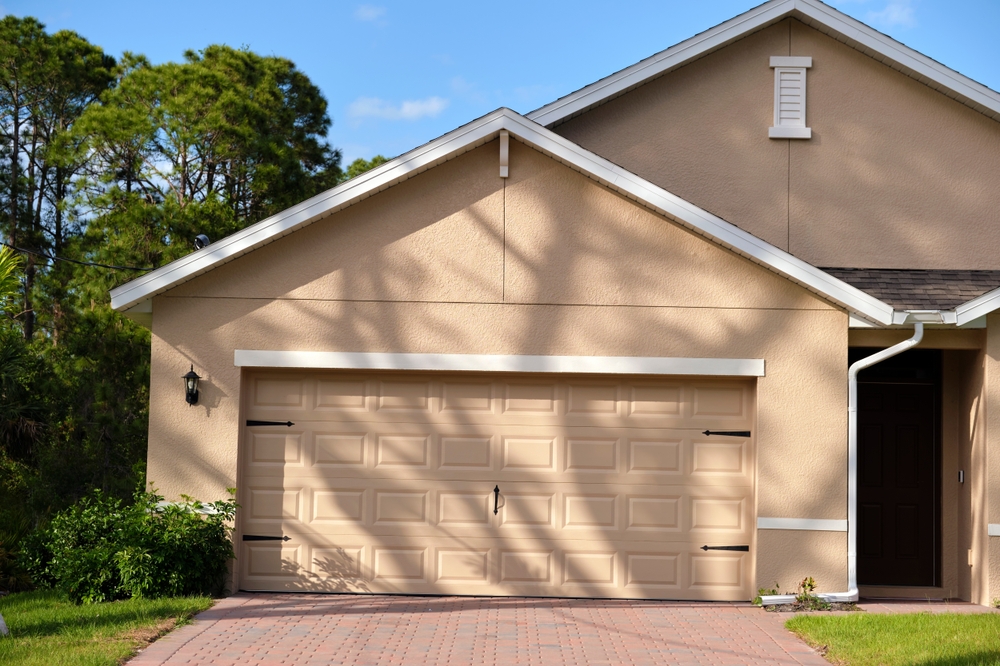
A homeowner picking a garage door color rarely thinks about psychology. They think about whether it looks nice next to the trim. Garage door color psychology operates underneath that surface decision anyway, shaping how a house gets perceived within seconds of anyone glancing at it. Warm tones read as inviting. Cool tones read as reserved, sometimes formal. Bold colors announce something. Neutral colors blend in on purpose. None of this is conscious for most people picking a color off a sample chart, yet the effect lands regardless of whether anyone meant to communicate anything at all. Two identical houses. Two different door colors. Two completely different first impressions from the exact same architecture.
1. Why Color Triggers an Emotional Response Before a Rational One
Color processing happens in the brain faster than most conscious thought, which is exactly why a house can feel welcoming or cold within a second of pulling into view. Red raises heart rate slightly in controlled studies. Blue tends to calm it. These aren’t marketing claims. They’re documented physiological responses that show up consistently across color psychology research, regardless of whether the subject knows anything about design or interior decorating at all. A garage door, given its size relative to the rest of a home’s exterior, ends up carrying more of that emotional weight than a person would expect from something functionally just a big moving panel. Sixteen feet wide, sometimes wider. Hard to ignore, whatever color it happens to be.
2. What Different Color Families Actually Signal
Deep blues and greens signal stability, the kind of color choice that reads as trustworthy without anyone articulating exactly why. Black and dark charcoal doors project confidence and a certain modern edge, popular in newer construction aiming for a sleek, contemporary look. Warmer tones, terracotta, deep red, mustard, feel more personal and less corporate, often chosen by homeowners wanting their house to stand out from a sea of beige. White and light gray play it safe, blending into almost any architectural style without demanding much attention either way. None of these associations are universal law. They’re patterns, strong enough to matter, loose enough to have exceptions everywhere. A homeowner who loves a specific shade for entirely personal reasons shouldn’t feel bound by any of this theory.
3. Personality, Conformity, and the House Next Door
Neighborhood norms exert real pressure on color choice, whether or not an HOA formally requires it. A street full of neutral tones makes a bold color choice feel like a statement, sometimes an unwelcome one to neighbors who valued the visual consistency. Home personalization choices like garage door color let a homeowner express something individual within an otherwise fairly standardized part of a house’s design. Some people lean into that individuality deliberately. Others avoid it entirely, worried about resale value or simply not wanting to stand out on a quiet street. Both instincts are psychologically valid, just pointed in opposite directions. One says fit in. The other says stand out. Neither is wrong, exactly, just different priorities wearing the same paint color as evidence.
4. How Desert Light Changes the Way Color Reads
Intense, direct sunlight common in a desert climate shifts how a color actually reads compared to the same shade under overcast or filtered light. Colors appear more saturated and vivid in bright sun, which means a bold choice that looked reasonable on a small paint chip can feel overwhelming once applied to an entire door facing full afternoon exposure. Darker colors also absorb significantly more heat in direct sun, a practical consideration layered on top of the purely psychological one. Testing a color sample directly on the actual door location, at different times of day, reveals things a showroom sample under artificial lighting simply can’t show. Morning light. Midday glare. Evening shadow. Three completely different versions of the same color, all in one day. What looks calm indoors sometimes looks aggressive outside, and the reverse happens just as often. A deep navy that reads sophisticated on a paint chip can turn nearly black under a July afternoon sun, losing the exact quality that made it appealing in the first place.
5. Color Choice as a Form of Nonverbal Communication
A garage door communicates something about a household before anyone inside it says a word to a visitor or a passerby. A bright, saturated color suggests confidence, maybe playfulness. A muted, classic tone suggests restraint, tradition, care taken not to draw attention. Real estate professionals sometimes advise sellers to shift toward more neutral colors specifically because a color statement one buyer loves might repel three others entirely. That’s not really about aesthetics at all. It’s about managing how many people can project themselves into a house from the driveway alone. A wildly personal color narrows that pool. A safer choice widens it. Neither is inherently better, but the tradeoff is real and worth naming out loud.
Conclusion
Color choice on a garage door carries more psychological weight than the decision usually gets credit for, shaping first impressions before anyone consciously registers why. Warm versus cool, bold versus neutral, personal versus market safe: each pairing sends a different signal whether a homeowner intended it or not. Door Pros helps Coachella Valley homeowners think through these choices with actual desert lighting conditions in mind, not just a paint chip held under fluorescent showroom lights that never quite match what the sun does outside. Getting the color right means understanding both the psychology behind it and how the specific environment changes what that color actually looks like once installed. Theory only goes so far. The actual door, in the actual light, on the actual house, is what ultimately settles the question. A door chosen thoughtfully says something true about a house. One chosen carelessly just says nothing at all. There’s no wrong answer here, only an answer someone actually thought through versus one picked at random off whatever sample happened to be on top of the stack.
“Choosing a garage door color? Door Pros can help you decide. Call 877-787-3667.”
FAQs
Q1. Does garage door color affect home value in Palm Desert, CA?
It can, since overly bold or unusual color choices sometimes narrow a home’s buyer pool, while neutral tones tend to appeal more broadly at resale.
Q2. What garage door colors work best in bright desert light in Indio, California?
Colors appear more saturated under intense sunlight, so testing a sample directly on the door at different times of day gives a more accurate result than a showroom chip.
Q3. Should garage door color match the neighborhood in Coachella Valley, CA?
It depends on personal preference, since matching creates visual harmony while a distinct color choice expresses individuality, and both are reasonable approaches depending on the homeowner’s goals.