


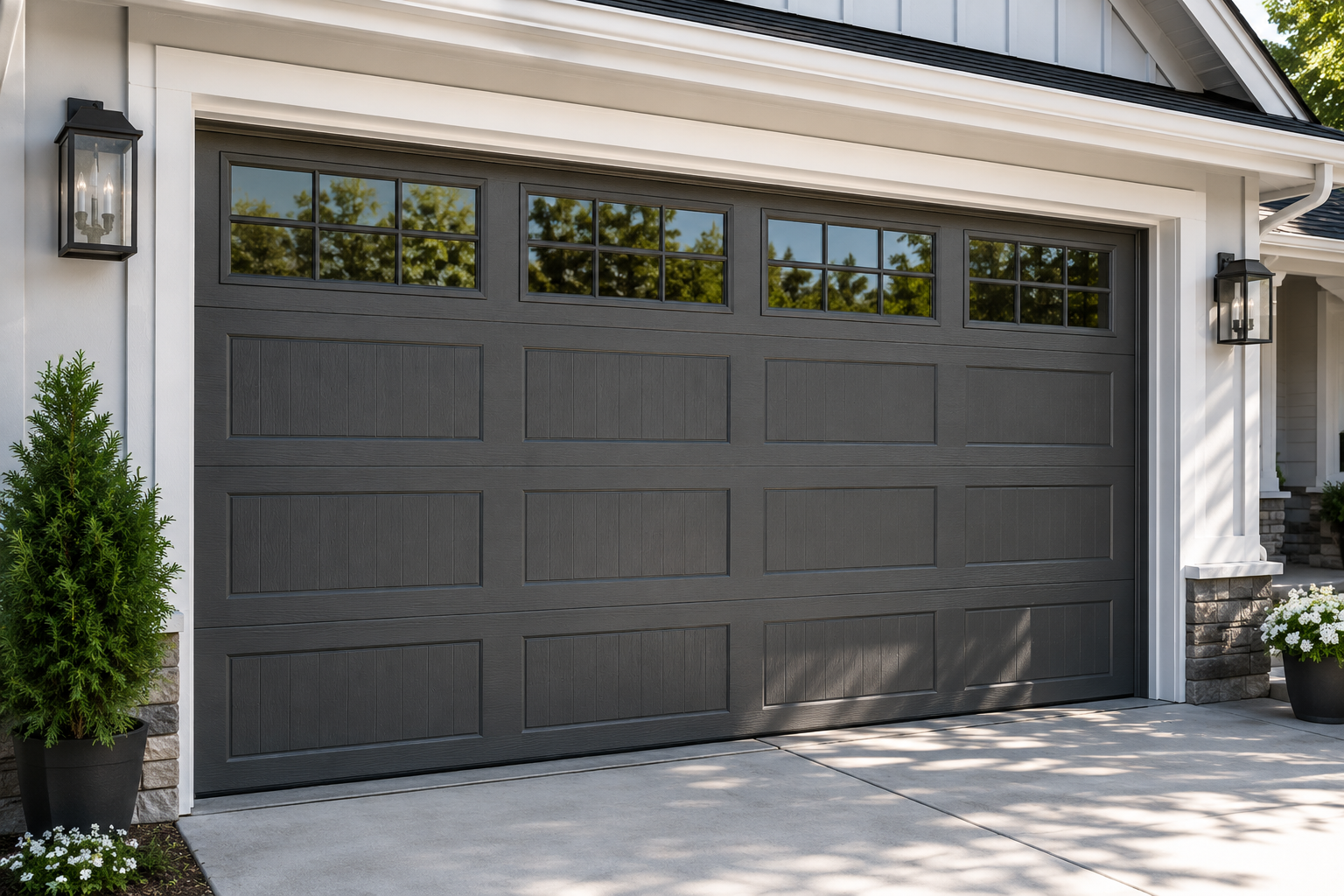
Most garages sit windowless and dim, lit only by a single bulb that clicks on with the opener and clicks off eight minutes later. Garage door windows change that entirely, letting daylight into a space that’s usually treated as an afterthought compared to the rest of a house. A row of small panes near the top of the door does more work than people expect, cutting down on how often anyone reaches for a light switch during daytime hours. The effect compounds in a garage used for anything beyond parking, a workshop, a home gym, a spot for folding laundry. Light changes how a space actually functions, not just how it looks from the driveway. A dim garage stays a dim garage no matter how nice the door looks closed. Open it up, and suddenly the whole space reads completely differently.
1. Why a Garage Without Windows Feels Like a Cave
A windowless garage relies entirely on artificial light, and that light usually comes from a single fixture mounted to the ceiling near the opener. Shadows pool in corners. Depth becomes hard to judge without natural light providing consistent, directional illumination the way sunlight does. People notice this instinctively even without articulating why a space feels off. A garage with even modest window coverage reads as larger, brighter, and more usable within seconds of the door going up. That perception shift happens before anyone consciously registers where the extra light is actually coming from. Ask someone why a garage suddenly feels bigger and most people can’t say. They just know it does.
2. Placement Determines How Much Light Actually Gets In
Windows positioned near the top of the door catch more daylight over the course of a day than ones placed lower, simply because there’s less obstruction from parked vehicles or stored items blocking the view. South facing garages in the Northern Hemisphere get the most consistent exposure throughout the year, while north facing ones receive softer, more even light without the harsh midday glare. Panel count matters too. Windows spread across the top two panels distribute light more evenly than the same total glass area concentrated in one section. A garage door installer who understands orientation can position windows to maximize actual usable daylight, not just check a box for aesthetic appeal. The difference shows up months later, on a random Tuesday afternoon when the garage stays bright without the light switch flipped.
3. Frosted Versus Clear Versus Tinted Glass
Clear glass lets in the most light but sacrifices privacy entirely, showing everything stored inside to anyone walking past on the sidewalk. Frosted or obscured glass provides Natural light enhancement while blocking a direct view, a compromise most homeowners land on once they realize what clear panels actually reveal about their storage habits. Tinted glass cuts glare and reduces some heat transfer compared to clear panels, useful in climates where direct sun through glass becomes a real issue rather than a minor annoyance. Some manufacturers offer insulated glass units specifically for garage doors, layering the privacy and heat benefits of tinting with better thermal performance than single pane options. The right choice depends heavily on what’s actually stored in the garage and how much anyone cares about passersby seeing it. A garage full of camping gear probably doesn’t need much privacy. A garage doubling as extra storage for anything valuable probably does.
4. Heat Gain Tradeoffs Worth Weighing First
Glass transmits heat far more readily than an insulated steel panel, which matters considerably in a desert climate where a garage door already fights intense afternoon sun most of the year. More window area generally means more heat entering the garage during peak sun hours, a real tradeoff against the daylight benefit windows otherwise provide. Low-emissivity coatings on glass reduce that heat transfer significantly without sacrificing much visible light, offering a middle path for homeowners who want both natural light and reasonable temperature control. Positioning windows away from the harshest western exposure, where afternoon sun hits hardest, reduces heat gain without giving up daylight entirely. Balancing these factors takes a bit more thought than picking whatever window style looks nicest in a catalog photo.
5. Garages That Do More Than Park Cars
A garage converted into a home gym benefits enormously from natural light, both for practical visibility and for the psychological lift daylight tends to provide during a workout. Workshops depend on good lighting for detail work, and windows supplement task lighting instead of replacing it, cutting down on eye strain during long stretches of close work. A well lit corner where someone actually sees the fine grain on a piece of wood, or the exact shade of a paint match, makes a real difference over hours of work. Even a garage used purely for storage benefits from windows, since finding a specific box or tool becomes noticeably easier without relying entirely on one dim overhead bulb. As garages increasingly double as flex space rather than pure vehicle storage, the case for windows gets stronger every year that the trend continues. Function follows light more than people initially expect. A space that feels good to be in gets used. A space that feels like a cave gets ignored, no matter how much equipment sits inside it.
Conclusion
Adding windows to a garage door solves a problem most homeowners don’t realize they have until natural light actually changes how the space feels. Placement, glass type, and climate all factor into getting this decision right rather than treating window style as a purely cosmetic choice. Door Pros helps Coachella Valley homeowners weigh the light benefit against the desert heat tradeoff, specifically, since what works in a mild climate doesn’t always translate directly here. A well planned window layout brightens a garage without turning it into a greenhouse during the hottest months. Getting both sides of that balance right turns a dim, forgettable space into one people actually want to spend time in, whether that’s parking the car or spending an hour on a treadmill after work.
“Thinking about adding windows to your garage door? Door Pros can help. Call 877-787-3667.”
FAQs
Q1. Do garage door windows increase heat in Palm Desert, CA?
They can, since glass transmits heat more readily than an insulated panel, though low emissivity coatings and careful placement away from western exposure help offset that in a hot climate.
Q2. What type of garage door window glass is best for privacy in Indio, California?
Frosted or obscured glass lets in natural light while blocking a clear view inside, which most homeowners prefer over fully transparent panels.
Q3. Are garage door windows worth adding in Coachella Valley, CA?
For garages used as more than parking, a home gym or workshop, yes, though the heat gain tradeoff is worth weighing carefully given the local climate.