


Salt in the air works on metal every single day, whether anyone’s paying attention or not, which is exactly why maintenance schedules that work fine inland fall short near the water. Coastal garage door maintenance requires more frequent attention than a standard inland routine, since salt residue accumulates steadily regardless of how well built or well coated the door actually is. A maintenance schedule built for a dry inland climate simply doesn’t account for the constant, low level corrosion pressure salt air creates. Skipping or stretching out routine tasks near the coast accelerates problems that would otherwise take years to show up somewhere drier. None of this requires elaborate effort. It just requires doing routine tasks more often than a typical maintenance calendar suggests. Monthly instead of yearly. That’s really the whole shift in mindset.
1. Building a Rinse Schedule That Actually Matters
Rinsing a garage door with fresh water removes accumulated salt residue before it has a chance to settle into seams, hinges, and fastener threads where corrosion actually starts. A monthly rinse works for most coastal properties, though homes directly on the waterfront sometimes benefit from doing this every two weeks during the heaviest salt exposure months. Plain garden hose water works fine for this task. No special equipment or cleaning product is actually necessary beyond consistent timing. Rinsing after a particularly windy or stormy stretch matters more than sticking rigidly to a calendar date, since wind carries salt further inland and deposits more of it during those specific conditions. Skipping this simple step is one of the more common reasons coastal doors age faster than they should. A garden hose costs nothing to run for five minutes. The corrosion it prevents costs considerably more to fix later.
2. Lubrication Needs Change Near Salt Air
Standard lubricants wash away or degrade faster in a salty, humid environment than they would somewhere drier, leaving hinges and rollers exposed to moisture more often than expected. Silicone based lubricants resist that washout better than petroleum based alternatives, holding up longer between applications near the coast. Applying lubricant to hinges, rollers, and the track itself every few months, rather than the annual schedule that works fine inland, keeps moving parts protected consistently. Skipping this more frequent schedule allows small amounts of surface rust to develop on moving hardware well before any visible damage shows up elsewhere on the door. A five minute task repeated more often beats a thorough job done too rarely to actually matter. Consistency wins over intensity here, every time.
3. Catching Rust Before It Spreads
Rust prevention garage doors near the coast depends heavily on catching the earliest signs, small orange spots or bubbling paint, before corrosion spreads beneath the surface coating. A tiny rust spot caught early usually means light sanding and a touch up coat of matching paint, a fifteen minute fix rather than a real repair. Left alone, that same spot spreads underneath the paint layer, eventually requiring a full panel section to be treated or replaced entirely, sometimes within just a single season of neglect. Checking the bottom edge of the door and around any window frames specifically matters, since these areas trap moisture longer than flat, exposed panel surfaces. Monthly visual inspections catch most rust problems while they’re still cheap and simple to address. A quick walk around the door with a flashlight takes less time than most people spend deciding what to watch that evening.
4. Hardware Inspection Points Worth Checking Monthly
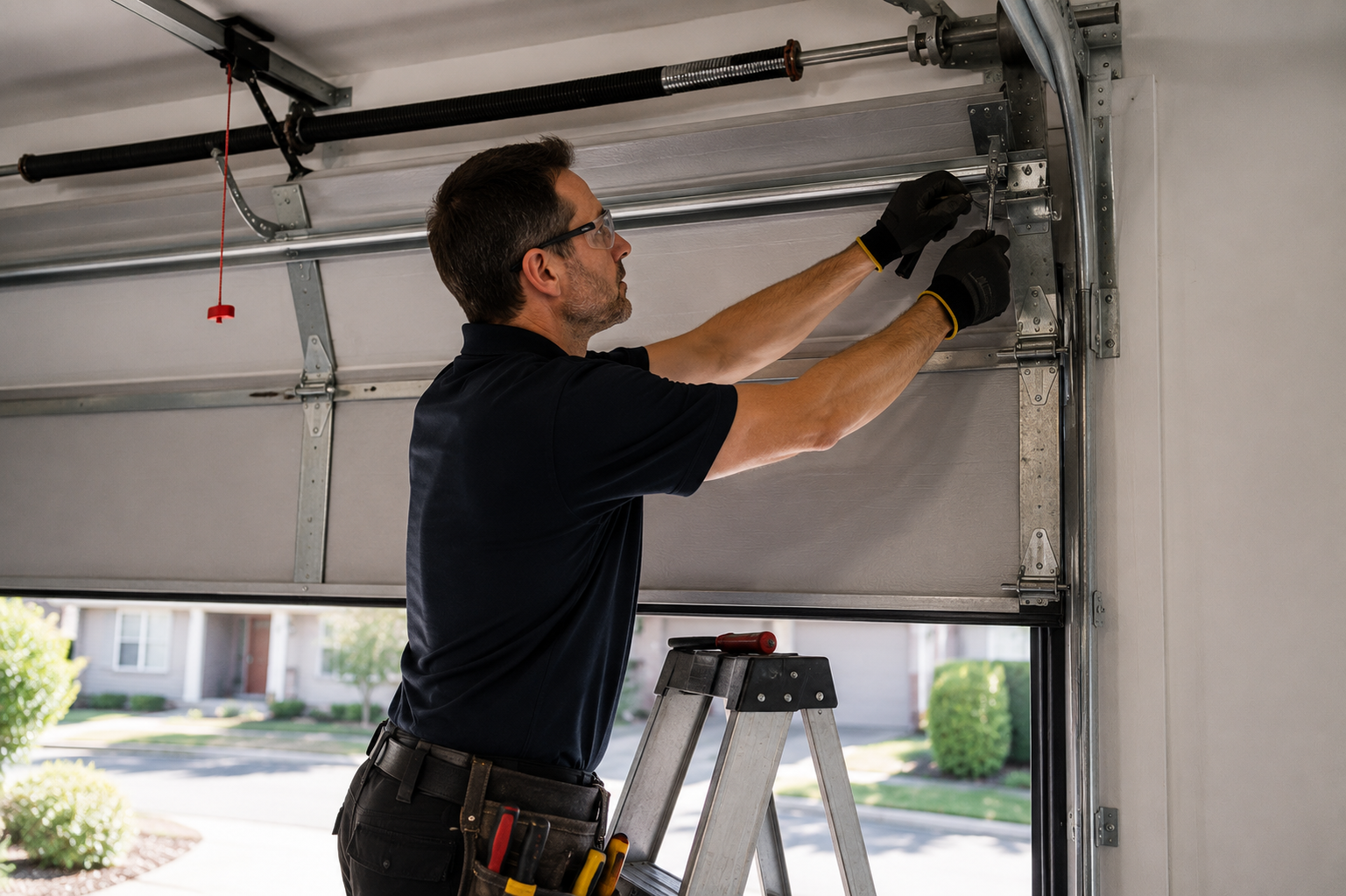
Hinges, rollers, tracks, and springs corrode faster near the coast than the door panel itself often does, since these components typically use thinner metal and standard, non-marine grade plating. Checking for stiffness in hinge movement, any grinding sound from rollers, or visible pitting on spring coils takes just a few minutes during a routine walk around the door. Marine grade or stainless hardware, while costing more upfront, resists this accelerated corrosion considerably better than standard zinc plated parts commonly installed by default. Replacing corroded hardware early, before it fails entirely, avoids the door becoming difficult or unsafe to operate. A quick hardware check alongside the monthly rust inspection covers both major coastal maintenance concerns in one short session. Ten minutes total. Rust and hardware, checked together, every month, without exception.
5. Seasonal Adjustments Worth Making
Storm season sometimes calls for an extra inspection beyond the regular monthly routine, specifically checking weatherstripping and seals after any period of heavy wind driven rain or salt spray. Winter humidity in some coastal regions actually exceeds summer levels, meaning maintenance shouldn’t taper off just because temperatures have dropped. Spring, after the harshest weather has typically passed, offers a good opportunity for a more thorough inspection covering everything skipped during faster monthly checks. Adjusting the maintenance calendar around actual local weather patterns, rather than a generic seasonal assumption, keeps the schedule matched to real conditions instead of an approximate guess. A maintenance routine that flexes with the seasons catches problems a rigid, unchanging schedule would miss. Set calendar reminders instead of trying to remember. Memory fails. Reminders don’t.
Conclusion
Coastal environments demand more from a garage door than an inland climate ever does, and the maintenance schedule has to reflect that difference to actually work. Rinsing, lubrication, rust checks, and hardware inspection all need to happen more often near salt air than a standard maintenance calendar assumes, since the corrosion pressure never actually lets up, even during calmer weather stretches. Door Pros helps homeowners build a maintenance routine matched to their actual local conditions, rather than applying a generic schedule that underserves a coastal property. A little extra attention on a more frequent schedule costs far less than replacing a door or its hardware years ahead of schedule, sometimes by an entire decade or more. Staying consistent with this routine keeps a coastal garage door looking and functioning well for its full expected lifespan, rather than needing early replacement over problems a rinse and a lubrication schedule could have prevented entirely.
“Living near the coast? Keep your garage door rust free. Door Pros can help. Call 877-787-3667.”
FAQs
Q1. How often should a garage door be rinsed in a coastal climate?
Monthly works for most coastal properties, though homes directly on the waterfront may benefit from rinsing every two weeks during peak salt exposure months.
Q2. What’s the best lubricant for a garage door near the ocean?
Silicone based lubricants resist washout from humidity and salt spray better than petroleum based alternatives, making them a better choice for coastal maintenance.
Q3. Is it worth upgrading to marine grade garage door hardware near the coast?
Yes, marine grade or stainless hardware resists corrosion considerably better than standard zinc plated parts, which corrode faster in salty, humid conditions.