


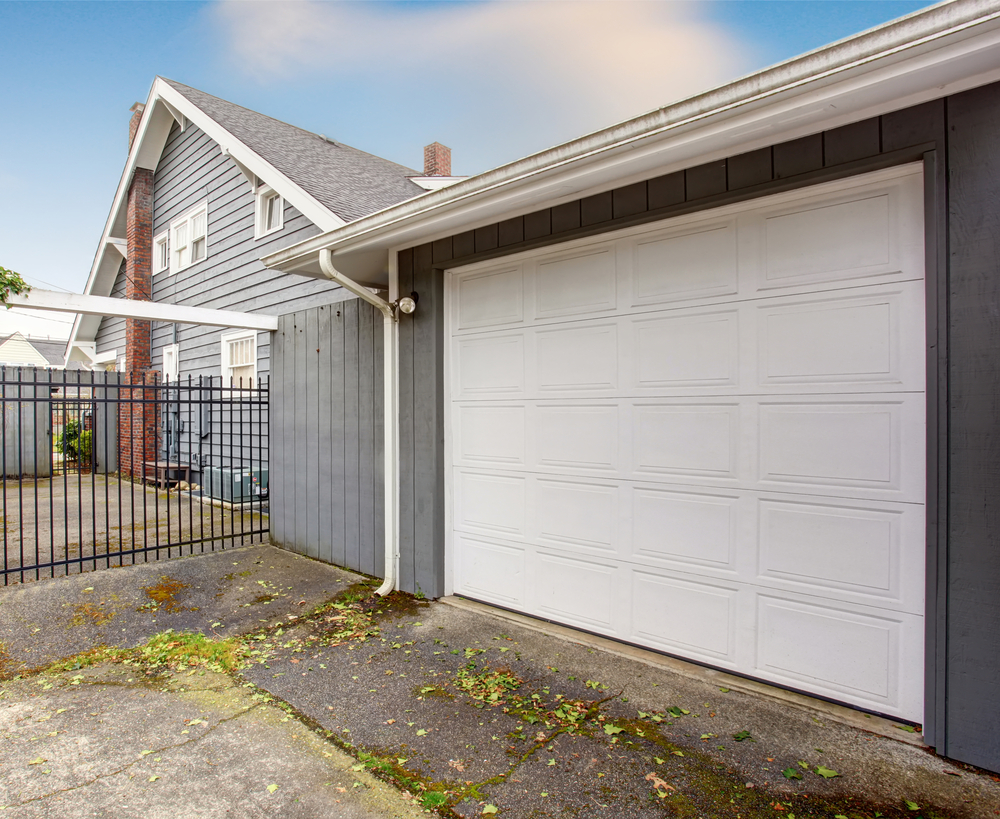
Power outages rarely announce themselves in advance, and the exact moment electricity cuts out is usually the same moment someone needs to leave for work or get a car out of the driveway fast. A Garage door during power outages becomes a much bigger problem than people expect, since most homeowners have no idea how to operate the door manually until they’re already standing in the dark trying to figure it out. Modern openers depend entirely on grid power unless a specific backup system is already in place, which means a standard outage instantly locks a vehicle inside the garage. None of this requires panic. It just requires knowing the manual release exists and testing it before an actual outage forces the issue. Five minutes now beats standing in a dark garage at eleven at night trying to remember which cord does what.
1. The Manual Release Cord Everyone Forgets About
Every standard garage door opener includes a manual release cord, typically a red handle hanging from the trolley that rides along the opener rail. Pulling that cord disconnects the door from the motor entirely, allowing it to be lifted and lowered by hand exactly like doors did before electric openers existed. Finding that cord in the dark, during an actual outage, is considerably harder than locating it during a calm test run in daylight. Many homeowners have literally never touched the release cord, sometimes for a decade or more after moving into a house with an opener already installed. Locating it once, in good conditions, saves real frustration during the one moment it actually matters. Red handle, hanging near the trolley, usually toward the back of the rail closest to the door itself.
2. How Battery Backup Systems Actually Work
A Backup battery garage door opener includes a rechargeable battery built directly into the unit, automatically switching over the moment grid power cuts out without requiring any action from a homeowner. These systems typically provide enough charge for a handful of open and close cycles, sometimes twenty or more depending on the specific model and battery age. The battery trickle charges continuously during normal operation, staying topped off and ready without anyone needing to think about it under normal circumstances. Older batteries lose capacity over time the same way any rechargeable battery does, which means a five year old backup battery might provide considerably fewer cycles than it did when new. Checking battery age and replacing it proactively, rather than waiting for a failure during an actual outage, keeps this system reliable when it matters most. Most manufacturers recommend replacement every three to five years, printed right on the battery pack itself if anyone bothers to check.
3. What Happens If You Manually Release Mid-Storm
Manually releasing a garage door during high winds requires real caution, since a door lifted by hand loses the controlled, motor assisted movement that normally keeps it stable during operation. Springs still hold most of the door’s weight even when manually released, but a gust catching an open door can cause it to move unpredictably without the opener managing that motion. Closing the door again after manual release means either lowering it by hand completely or waiting for power to return and reconnecting the trolley to the opener. Attempting this during severe weather, rather than before a storm actually arrives, adds unnecessary risk to an already stressful situation. Planning ahead of a known weather event, closing the door and testing the release beforehand, avoids needing to improvise during the worst possible conditions.
4. Testing Backup Systems Before You Actually Need Them
Simulating an outage by unplugging the opener, or flipping the breaker specifically for that circuit, confirms whether a battery backup system actually engages the way it’s supposed to. This test takes maybe five minutes and reveals problems, a dead battery, a failed switchover, while there’s still time to fix them before an actual emergency. Testing the manual release alongside the battery backup covers both scenarios, powered backup and complete manual operation, in a single short session. Doing this test twice a year, timed around seasonal severe weather patterns, catches battery degradation before it becomes a surprise during an actual storm. Skipping this test means finding out whether the system works at the exact moment it’s needed most, which is the worst possible time to discover a problem.
5. Building a Simple Household Plan for Extended Outages
A brief, written plan covering how to manually operate the garage door helps anyone in the household handle the situation, not just whoever normally deals with mechanical issues. Keeping a flashlight specifically near the garage door, rather than assuming one will be easy to find during an actual outage, removes one more obstacle from an already dark, confusing situation. Extended outages, lasting days rather than hours, eventually drain even a well maintained battery backup system, making the manual release the only remaining option eventually. Households in areas prone to extended outages benefit from a portable generator capable of powering the opener directly, extending backup capability well beyond what an internal battery alone provides. A few minutes of planning now prevents a stressful scramble during an outage that arrives without warning, as they usually do.
Conclusion
A garage door that only works with grid power creates a real inconvenience during any outage lasting more than a few minutes, one that’s easily prevented with a little preparation. Manual release familiarity, a functioning battery backup, and a simple household plan together cover most outage scenarios a homeowner is likely to face. Door Pros helps Coachella Valley homeowners set up and test these systems before they’re actually needed, rather than discovering a problem during the next outage. A five minute test twice a year costs nothing and prevents a much bigger headache during an emergency nobody sees coming until it’s already happening. Being prepared here means an outage becomes a minor inconvenience instead of an actual problem blocking a driveway, right when leaving the house matters most.
“Ready for the next power outage? Door Pros can help you prepare. Call 877-787-3667.”
FAQs
Q1. How do I open my garage door manually during a power outage in Palm Desert, CA?
Pull the red release cord hanging from the trolley to disconnect the door from the motor, then lift or lower the door by hand just like a door without an opener.
Q2. How long does a garage door battery backup last in Indio, California?
Most battery backup systems provide enough charge for twenty or more open and close cycles, though that number drops as the battery ages and loses capacity.
Q3. Should I test my garage door’s backup battery in Coachella Valley, CA?
Yes, testing twice a year by simulating a power outage confirms the battery still engages properly, catching degradation before an actual emergency reveals it.