


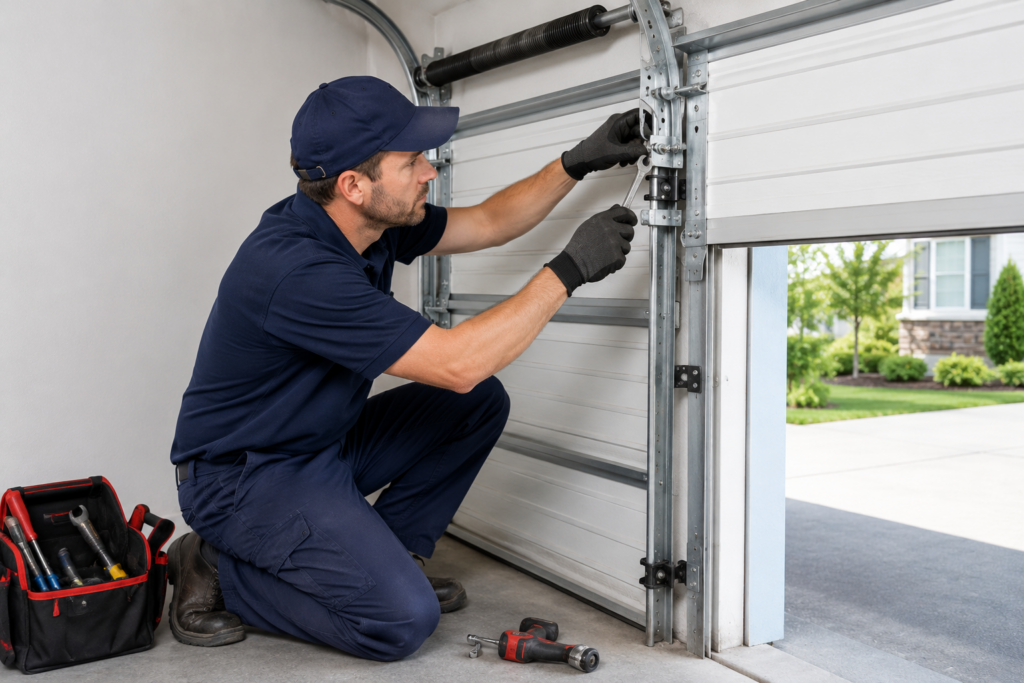
The wind finally settled down sometime overnight, you hit the opener this morning, and the door crawls upward with a harsh, metal-on-metal grind that absolutely was not there yesterday. Almost every single time, the culprit behind that racket is sand in garage door tracks, fine grit that the storm packed into every channel and roller while you were sound asleep. Out here, one genuinely windy night can blow a startling amount of loose desert straight into your garage hardware. That sand burrows down between the rollers and the steel track, and just like that, the smooth glide you’d quietly taken for granted turns into a gritty, grinding crawl. It’s the mechanical version of running sandpaper against your door every time it so much as moves. Leave it alone, and that grit slowly chews through the rollers, carves grooves into the track, and turns what should be a five minute cleanup into a genuine repair bill. The reassuring part is that catching it right now keeps the whole thing cheap and simple.
1. What That Awful Sound Is Actually Telling You
That grinding noise isn’t your door just being dramatic for attention, it’s a real and honest cry for help. When grit settles deep into the tracks, the rollers simply can’t spin freely anymore, so instead of rolling they start to drag and skip along the bare metal. Every pass grinds the trapped sand a little deeper, scoring fresh scratches into both the rollers and the inner track walls. You might also catch the door moving in little jerks or hesitating partway through its climb, which is just the motor straining hard against all that added friction. The sound is your early warning system, and it’s a whole lot cheaper to actually listen to it now than to wait until a roller seizes up completely.
2. Getting the Grit Out Before It Does More Harm
Start simple here, because honestly, most of the time simple is all the job ever calls for. Grab a shop vacuum with a narrow nozzle and run it along the entire length of both vertical tracks, then wipe the inside channels down with a damp cloth until that rag finally comes back clean. Cleaning garage rollers after sandstorm damage means paying real attention to the small wheels themselves, since sand absolutely loves to pack into the bearings where you can’t easily spot it. Roll the door up manually a foot at a time, pausing to wipe each roller as it slides into reach. Skip any household oils for this part, since anything sticky just turns around and glues fresh sand right back into place.
3. When a Simple Cleaning Just Isn’t Enough Anymore
Sometimes a storm leaves behind a good deal more than a dusty mess to sweep up. A strong enough gust can fling a branch or a rock hard enough to dent or bow a track, and a bent track is going to grind no matter how spotless you manage to get it. Rollers that have been chewed up and pitted over several rough seasons won’t ever run quietly again either, regardless of how patiently you clean each one. This is the exact point where desert wind garage door repair quietly shifts from a casual weekend chore into a job for someone carrying the right tools. A seasoned pro can straighten or fully replace a damaged track, swap out the rollers that are clearly shot, and confirm the door still hangs balanced and square on its hardware.
4. Keeping the Next Storm From Starting This All Over
A little bit of prevention spares you from running through this entire song and dance after every big blow rolls through. Fresh weatherstripping along the bottom edge and both sides of the door blocks a huge share of the grit long before it ever finds its way into the tracks. When it comes to preventing sand buildup in garage hardware, a quick monthly wipe-down paired with a fresh bead of silicone-based lubricant on the rollers goes a genuinely long way. Adding brush-style seals to the door edges helps choke off most of that windblown sand right at its favorite entry points. None of this is the least bit glamorous, but it sure beats waking up to that same grinding sound on a loop every windy season.
5. The Right Way to Lubricate and When to Step Back
Once everything is finally clean, the real finish line is a proper lubricant, and that choice matters far more than most people ever realize. Reach for a silicone or lithium-based garage door spray, never the all-purpose stuff that only attracts dust and gums everything up within weeks. Lightly hit the rollers, hinges, and spring with it, then run the door through a few full cycles to work the lubricant in evenly. One firm warning before you dig in, though: if the trouble traces back to the torsion springs or the lift cables, stop right where you are and call a professional, because those parts hold enormous tension and can hurt you badly. Knowing exactly where your own comfort zone ends is a real part of doing this job the right way.
Conclusion
A garage door that grinds in the wake of a windstorm is hardly ever truly broken, it’s just choked full of the dirt that blew in overnight. Clear the sand out of the tracks, clean each roller with a bit of care, and give the whole assembly a proper silicone lubricant, and most doors slide right back to gliding in near silence. If a track has been bent or the rollers are worn well past saving, that’s simply your cue to bring in a pro rather than keep fighting it alone. Stay a step ahead of the next storm with fresh seals and a fast monthly wipe, and the grinding becomes a rare surprise instead of a tired seasonal ritual. A few quiet minutes of care right now spares you a far uglier headache somewhere down the line.
“Door grinding after the last windstorm? Call Door Pros at 877-787-3667 and we’ll clear the sand and get you gliding quietly again, fast.”
FAQs
Q1: Why does my garage door grind after a windstorm in Palm Springs, CA?
In Palm Springs, CA, those strong desert winds blow fine sand straight into the door tracks and roller bearings, where it acts like sandpaper against the metal. Clearing the grit and re-lubricating usually quiets the door right back down.
Q2: How often should I clean my garage door tracks in the desert?
For homes in Palm Springs, CA, a quick wipe-down once a month is smart, plus an extra cleaning right after any major windstorm. Pairing that with fresh weatherstripping keeps most of the sand out of the hardware in the first place.
Q3: What should I use to lubricate a sandy garage door?
Stick with a silicone or lithium-based garage door spray, which is ideal for the dusty conditions around Palm Springs, CA. Avoid all-purpose oils, since they attract more sand and gum up the rollers faster than they help.